I surveyed a country club while holding a conversation, because the Hamina Clip never asked me for anything
Drew Lentz · 2026-09-25
I surveyed an entire country club with the Hamina Clip on my belt while holding a conversation with the staff, because the device never asked me for anything.
I'm Drew Lentz and I do wireless site surveys: I go out to different places to find out if Wi-Fi is going to work there, how many access points it is going to take to provide the coverage they need, and which pieces of equipment to spec. On that job I didn't have to wait for the Clip to synchronize, and I didn't have to wait for it to install some type of driver, install some type of service or app. It just worked the way you would imagine it would, and just getting it connected was really impressive.
That is what matters to me on a job. The Clip sat on my belt while I walked and talked with the people from the club, and the conversation is half the survey — it is where the design actually comes from.
Why the conversation is half the survey
Most of the job is understanding somebody's environment well enough that I can give them an adequate engineering and design, and that understanding comes out of the conversation the Clip left me free to have. When I get on-site I get on my tools, and the first thing I do is look at the physical environment. I meet up with whoever the team is there and I have them walk me through where the Wi-Fi is going to be used, where the people are going to be congregating, and where the actual service needs to be. I make sure to ask them where that service is so that they can direct me.
From there I work top down, starting with the people using the Wi-Fi. Who are these people, what type of users are they, the power users or the novices? Once I understand a little about the users, I want to understand what devices they are using: is it a tablet, is it a phone, is it a laptop? Is it a broad corporate purchase, is it BYOD, is it newer or older?
Once I understand what the hardware is, I like to talk about the applications they are running on it. Is this a digital advertising company, is it a signage company, is it a healthcare provider, is it a school? What are we talking about from an application spread perspective? And then I want to understand specifically what services they are going to be running on those devices, so not just the applications but everything else we need to take into account — do they need to print, do they need to stream, do they need to stream to Apple TV devices, and so on.
Only after all of that do I get out and start looking for whatever the basic signal level is, and I do an assessment to identify the noise floor and SNR in the existing environment. If I am doing an AP on a stick survey, I put an access point on a stick using a WiFiStand and a tripod, turn it on, and walk around doing a walking survey to see what the coverage from that specific access point is going to look like. That gives me really good data to take back to them about how many devices to place and where to place them. Normally I am running that whole interview over the top of a screen, which is exactly the part the Clip took away.
What did the Hamina Clip handle well?
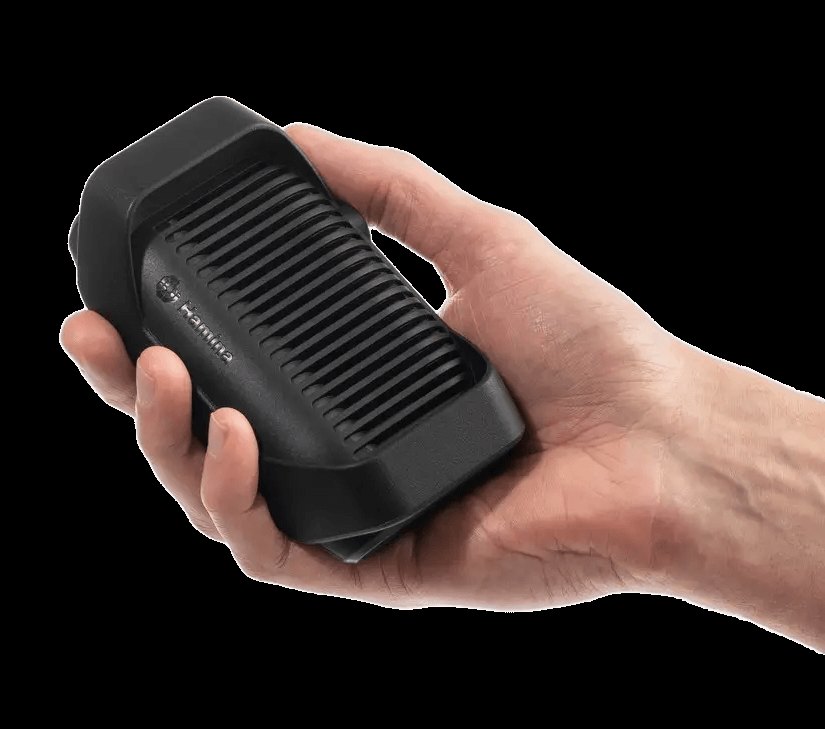
Once it did connect, I could walk around and just clip it on. It's lightweight, it's easy to carry, it doesn't heat up. That allowed me to freely walk and have a conversation with the people there from the club, and understand a little about their environment while the club was doing everything it was supposed to do.
If you are taking one out on site
- When you depress the buttons on the clip, hold them until the light turns on.
- Snap the belt clip onto your belt or your bag so it stays out of the way while you walk.
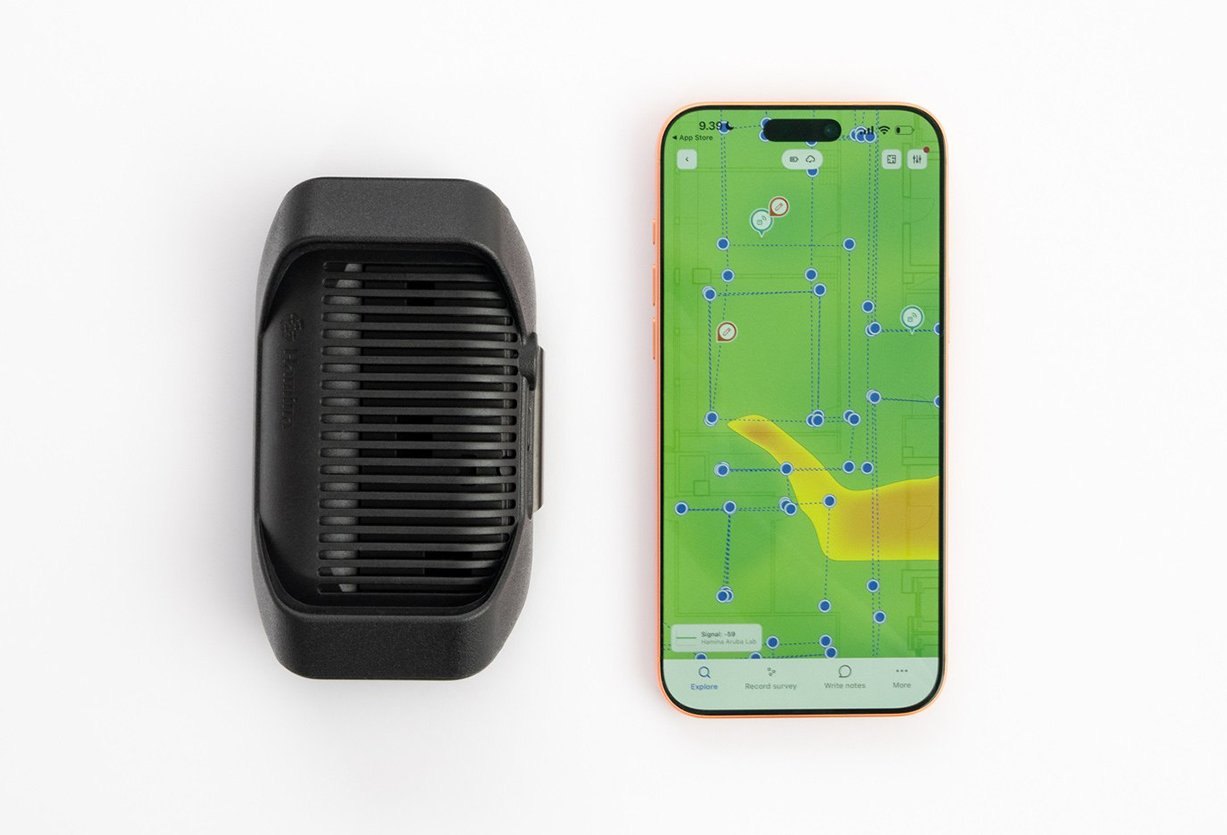
- Have the app open on your phone before you start, and you can immediately stream test results straight to it.
I was asked twice where I had to work around the device, and my answer did not change: I didn't really, because it was so easy to use and provided all the information I needed. What it bought me was where I was looking — at the person telling me where everyone sits.