What 7,400 Student Hours Are Actually Worth to a Region
Eloy Garza · 2026-10-02

Too often, education, workforce, and community development organizations operate in silos, while attempting to support the same stakeholders. Everyone is trying to serve the same student, the same employer, the same region, and yet the efforts rarely touch. That observation is what pushed me toward a different approach at the University of Texas Rio Grande Valley: embedding work-based learning inside academic programs through the Student-Led Agency model, supported by a centralized work-based learning management system, so that connecting theory to practice is not an add-on that a student has to go find.
Since 2023, more than 900 students have partnered with 250-plus businesses to address authentic business challenges, producing measurable outcomes for employers and transferable skills for students. The point of the design is scale. Rather than targeting specific populations, the initiative ensures that all students have access to experiential learning, regardless of background or discipline.
Why is participation in work-based learning still so low?
The benefits are clear, and participation is still limited. A recent analysis found that only 11 to 17 percent of college enrollees, and about 30 percent of graduates, complete a work-based course such as an internship, practicum, or field project during their studies (Zhou, 2023). That gap leaves graduates underprepared for the demands of today's workforce. Nearly two-thirds of business leaders report difficulty finding entry-level talent with durable skills such as critical thinking and problem solving (62 percent) and adequate business skills (65 percent), according to the Business-Higher Education Forum in 2024. The World Economic Forum projects that 44 percent of the skills employees rely on today will be disrupted within the next five years.
Employers are also clear about the solution. When asked which types of experiential learning are most valuable, nearly half, 47 percent, identified project-based learning as the best preparation for career readiness. The problem is not that institutions doubt the value. It is that postsecondary institutions often lack the infrastructure to systematically embed work-based learning at scale, leaving access uneven across programs and demographics.
Why are traditional assessments the wrong instrument here?
Traditional assessment methods such as multiple-choice tests and written exams are ill suited to measure the real-world skills required by employers. Students need opportunities to demonstrate critical thinking, collaboration, communication, and creativity through authentic projects that address real-world business problems. Research confirms that project-based and performance-based assessments are far more effective in measuring student growth and readiness for the workforce.
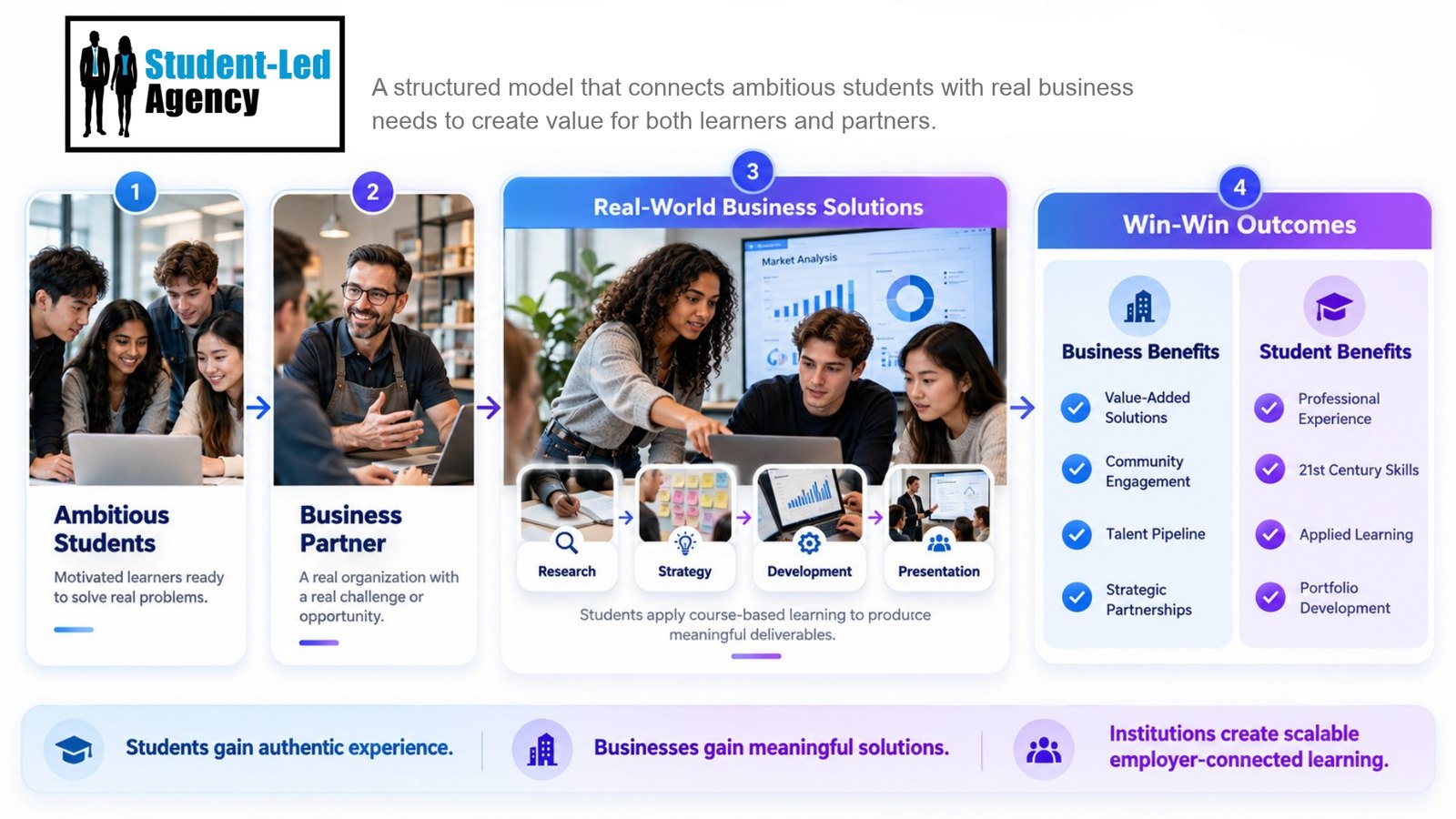
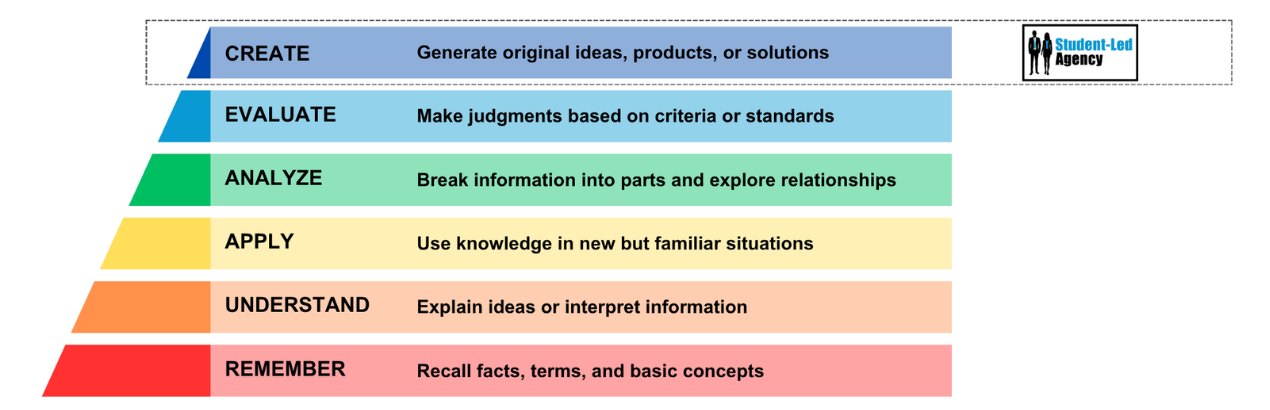
The Student-Led Agency model, developed in South Texas, embeds real-world projects directly into courses. Students act as consultants for local businesses, applying classroom knowledge to authentic business challenges. That places them at the highest level of Bloom's Taxonomy, create. While traditional coursework often emphasizes remembering, understanding, and applying concepts, this model requires learners to synthesize knowledge across disciplines, evaluate complex challenges, and design original solutions for real business and community partners.
This approach ensures that WBL is not merely an exercise in application but an opportunity for innovation and value creation.
Students move beyond classroom simulations to generate tangible deliverables such as business strategies, marketing campaigns, financial plans, and technology recommendations that are implemented by employers and community organizations.
What does this look like inside an actual course?
Since fall 2023, we have implemented the model in the Robert C. Vackar College of Business and Entrepreneurship. More than 900 students have collaborated with over 250 businesses, delivering marketing strategies, operational solutions, and business plans. Cross-curricular collaboration has amplified the impact. Marketing and finance students partnered to support international companies from Mexico in assessing market entry strategies for South Texas. Marketing students developed go-to-market strategies, while finance students created three-year financial forecasting models. Together, they delivered actionable solutions that influenced cross-border business decisions while gaining real-world consulting experience.
In Chicago, the GANAS initiative, which stands for Grit, Action, Navigation, Access, Soaring, expanded the model across disciplines with Roosevelt University, Dominican University, and Illinois Tech. Students conducted technology audits, event planning, and operational improvements for social service organizations, guided by faculty mentors. Professors reported enhanced teaching effectiveness while community partners gained sustainable solutions. Roosevelt University is now using the Student-Led Agency model to scale the Roosevelt Incubator Schaumburg Enterprises (RISE) program, based out of their Schaumburg Campus. The incubator program will provide local businesses in the early or on-going stages of their venture with facility access, intern support and a lecture series to help them succeed. The model is not limited to business disciplines either. Its structure applies to health care through patient education projects, to IT through cybersecurity audits, and to advanced manufacturing through process improvement projects.
How do you measure any of this?
A critical innovation of this project is the integration of tools to track skills, projects, student growth, and economic impact over time. Pilot data showed significant growth in student-reported skills. Students who reported having "very much" evidence of critical thinking increased from 3 percent on the presurvey to 42 percent on the postsurvey, with comparable growth in communication, collaboration, and creativity and innovation.
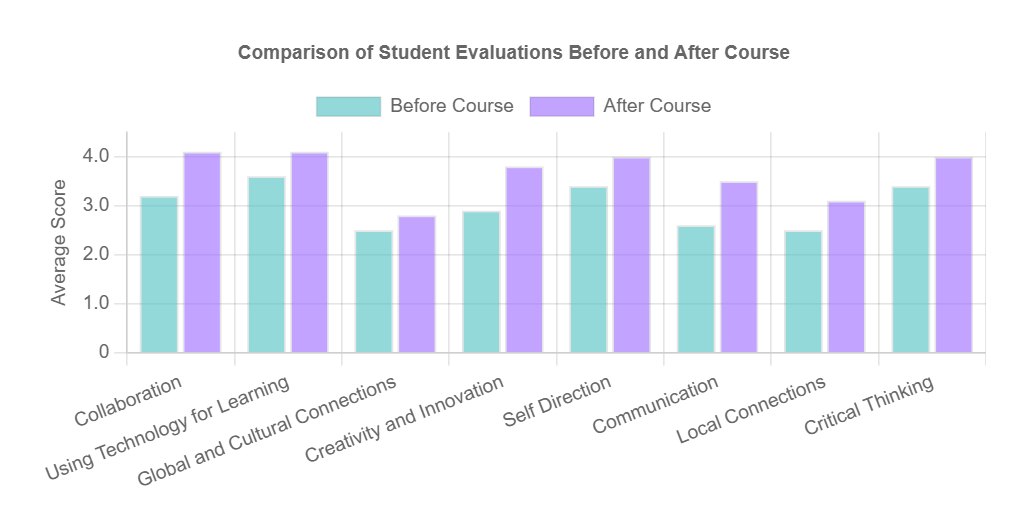
The system tracks eight core 21st century skills: critical thinking, collaboration, communication, creativity and innovation, self-direction, global and cultural connections, local connections, and using technology for learning. It clocks student hours with clock-in and clock-out and geotag features, so we know how much time was spent in classrooms, on site at businesses, or remotely. Each milestone is evaluated by faculty and industry partners using standardized rubrics and five-star rating scales, with real-time feedback. Peer evaluations let students assess their teammates' contributions, which promotes accountability and mirrors workplace collaboration.
Then there is the part that changes the conversation with a chamber of commerce or an economic development corporation. Applying the national volunteer hourly rate, currently $36.14 (Independent Sector), to documented time produces a number nobody has to take on faith. Over the past two years, UTRGV students have logged more than 7,400 hours in work-based learning projects, representing an estimated community contribution valued at more than $265,000. Work-based learning does not only develop students. It generates tangible economic value, and now we can show it.
That measurement also resolves a barrier cited by 46 percent of higher education leaders, who report difficulty collecting metrics on partnership progress. By documenting student hours, skills, and milestones in real time, institutions produce actionable data they can report for federal and state accountability requirements, including Perkins V indicators on participation, credential attainment, and placement.
Who has to be at the table?
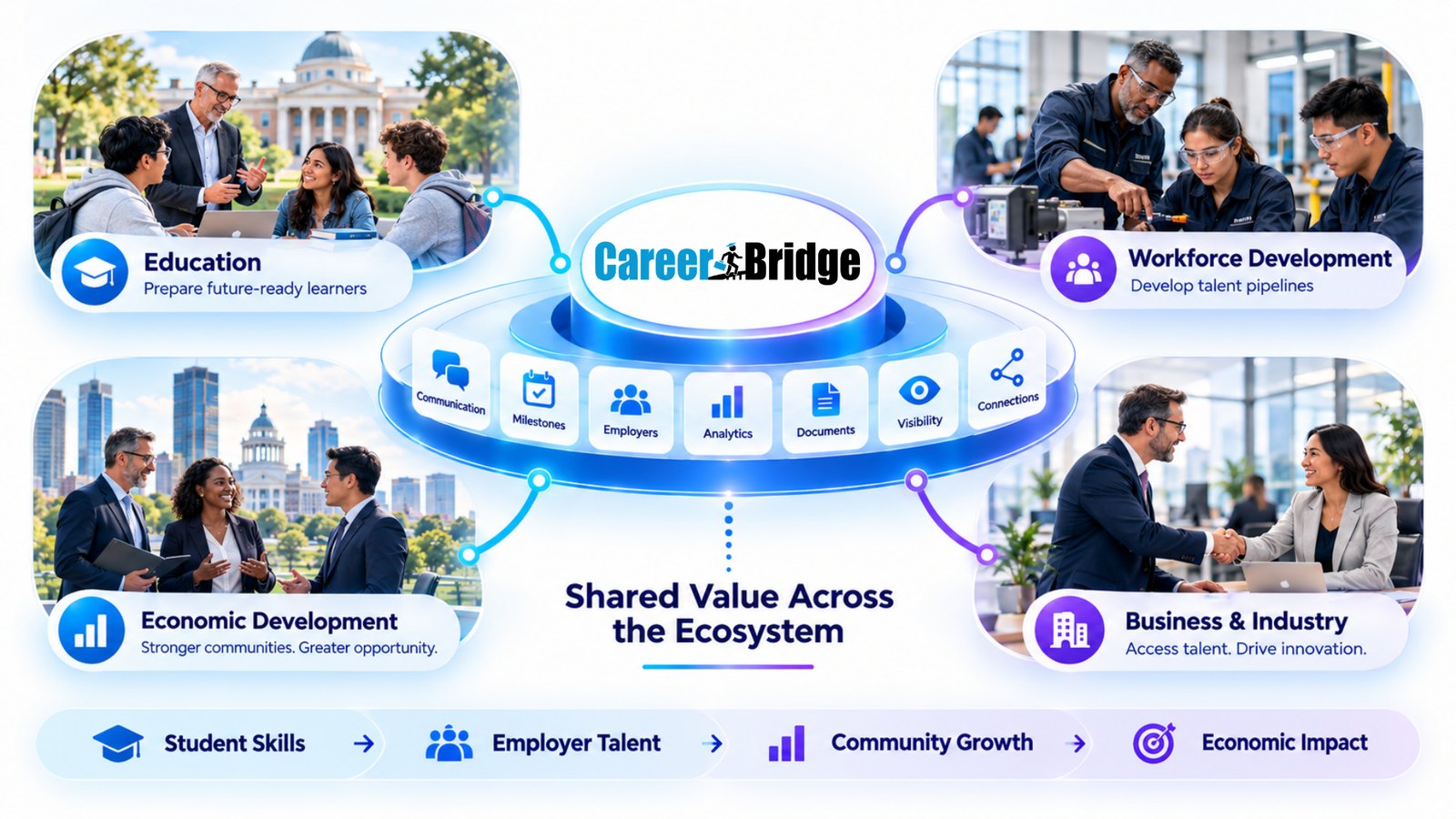
At the local and regional levels, the model has generated strong partnerships with the McAllen Economic Development Corporation, the Pharr, Weslaco, and McAllen chambers of commerce, Small Business Development Centers at UT Rio Grande Valley and UT San Antonio, and the South Texas Builders Alliance. Those collaborations validate the model's relevance not only to education but also to economic development and small business growth.
The approach aligns with statewide priorities in the Texas Workforce System Strategic Plan 2024 to 2031 and the Texas Workforce Commission's Work-Based Learning Strategic Framework, which highlights mentorships, internships, and project-based learning as essential strategies. The Professional Services and Corporate Operations sector profile confirms that communication, problem solving, and analytical skills are critical to the state's fastest growing cluster, which employs more than three million people. High-demand roles include project management specialists, marketing specialists, IT analysts, and financial specialists, all of which map directly onto the work students are already doing.
What makes it last after the champion leaves?
Sustainability is the question I get asked most, and it is the right question. Embedding work-based learning into course syllabi and curriculum ensures persistence, even as faculty or leadership changes. The management system is designed for interoperability with institutional learning management systems, which reduces friction for adoption. Professional learning opportunities equip faculty to embed authentic projects within their own courses rather than depending on one person to carry the whole program. And aligning with Perkins V and state funding priorities positions institutions to draw from federal CTE funds, institutional budgets, and employer contributions.
Universal engagement in WBL is both an educational imperative and an economic necessity. With limited participation in structured work-based learning, students graduate underprepared, employers face persistent skills gaps, and regional economies lose potential value. Now is the moment for higher education, business, and community leaders to act together.
Do this
- Institutionalize work-based learning across disciplines by embedding project-based, industry-partnered experiences into required coursework in all career clusters.Expand faculty professional development so instructors can design and facilitate high-quality projects using project-based pedagogy and industry engagement strategies.Codesign projects that prioritize the durable and business skills that employers report are missing in new graduates.Keep continuous feedback loops running by having employers participate actively in milestone evaluations and give feedback to students and institutions.Adopt a centralized work-based learning management system to track hours, skills growth, employer engagement, and economic impact.Tie work-based learning to Perkins V indicators, accountability frameworks, and performance-based funding, and invest in the chambers, EDCs, and workforce boards that hold the regional ecosystem together.