
How it works
A text, a call,
and it's written.
Most of the work happens while you are doing something else. Here is each step, what you decide, and what happens if you miss one.
Step 01
The morning text
Every weekday, TelePost reads the trade press in your industry — the same publications you would read if you had the time. It picks three stories you would have something to say about.
Not three trending stories. Three that match the work you actually do, the things you have talked about before, and the subjects you told it to skip.
- ✓ Text back a number and it calls you.
- ✓ Text MORE and it sends three others.
- ✓ Ignore it and nothing happens. No reminder, no nagging.

(956) 555-0188 ›
Today 7:30 AM
- Spot rates fall for a third straight month
- County approves water deal for the data center
- The grant no one in the trade applied for
Delivered
What lands at 7:30
Step 02
The call
About ten minutes. The interviewer has read the story and knows what you do for a living, so it does not waste your time catching up.
It is a conversation. When you say something worth chasing, it asks about that instead of reading the next question. When an answer is thin, it asks for the specific — what happened, when, what it cost — rather than asking you to say more.
- ✓ Bad time? Say so. It tries another day.
- ✓ Do not want to answer something? Say so and it moves on.
- ✓ It only calls in the hours and on the days you pick.
TelePost
mobile · (956) 555-0188
Answer it like any other call
Step 03
The write-up
By the time you are back at your desk, the article is waiting. It is written from the recording, so the examples and the phrasing are yours. If you did not say it, it is not in there.
You also get a headline, a quote pulled out, a caption for social, and the artwork. Change any of it. Most people fix one sentence and hit approve.
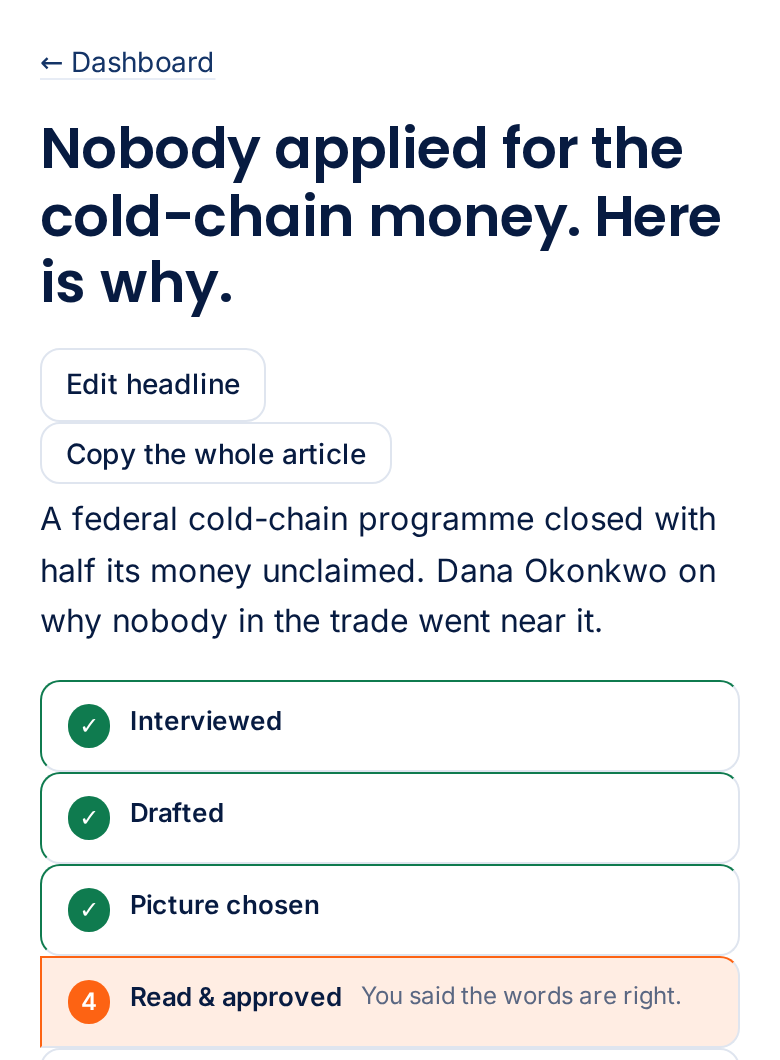
Waiting when you hang up
Step 04
Where it goes
You get a page on TelePost for free. On top of that, send it to your own website, LinkedIn, Substack, WordPress, Wix, a podcast feed, or an audio version read out loud.
Pick the destinations once and they stick, or choose per article. Afterwards it shows you exactly where each copy landed, so a post that quietly failed is visible instead of assumed.
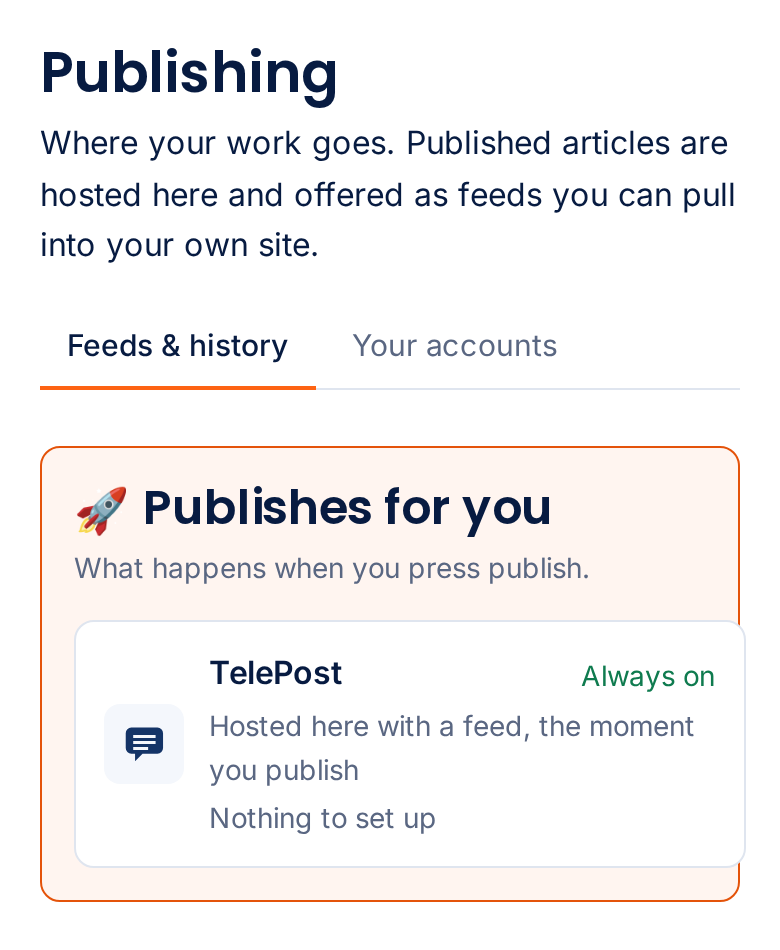
Every destination, and whether it landed
What you decide
The parts people assume are automatic, and are not.
When it calls
The days, the hours, and the time of day. Outside them your phone stays quiet.
What it reads
Your industry, plus any publication you add. Paste a link and it finds the feed.
What it never asks about
Tell it a subject you are tired of and it stops offering stories about it.
Whether anything posts
Nothing goes out until you approve it. Approving and posting are two clicks.
Straight answers
What if something goes wrong?
I missed the call.
It tries again later the same day, inside your calling hours. If it still cannot reach you, the story stays on your list and you can start the call yourself whenever you want.
I hated the article.
Edit it, or throw it away. Nothing has been posted — approving is a separate step for exactly this reason. You can also have it rewritten from the same recording without doing the call again.
The call cut off halfway.
Whatever was recorded still becomes a draft, and it is usually more usable than you would expect. If it is too thin, the story goes back on your list.
It posted to my site but not to LinkedIn.
The publishing page shows each destination separately, with the time it landed. Anything missing can be sent again on its own — you do not republish the whole article.
I want to stop.
Cancel on your billing page. Your articles stay yours, your site keeps working, and you can delete the account entirely from one page if you want it all gone.
That's the whole thing.
Setup takes about ten minutes. Your first call can be today.